Search This Blog

Wednesday, 17 February 2021

#UAE Considers Cap on Food Prices as Global Crop Costs Soar - Bloomberg

UAE Considers Cap on Food Prices as Global Crop Costs Soar - Bloomberg

The United Arab Emirates is considering price controls on some foods, as soaring crop prices affect countries across the world.

The Persian Gulf nation could place price caps on chicken and milk, said Mariam Almheiri, the country’s minister of state for food and water security.

Global food prices climbed to the highest level in six years last month, according to a United Nations index. The surge has been driven by crop such as corn and soybeans, which are widely used to feed farm animals. That’s adding to food inflation worries for nations already strained after the coronavirus pandemic upended supply chains.

“We are studying this very carefully and we may need some adjustments,” Almheiri said in an interview, adding that they could apply to both local and imported products.


#Saudi Oil Minister Urges Producer Caution Before OPEC+ Meeting - Bloomberg

Saudi Oil Minister Urges Producer Caution Before OPEC+ Meeting - Bloomberg

Saudi Arabia urged fellow members of the OPEC+ oil alliance to remain cautious as they prepare to consider further output increases.

Crude prices have rebounded to a one-year high above $60 a barrel in New York as fuel demand recovers and the 23-nation OPEC+ coalition constricts supply. Still, the ongoing pandemic poses a continuing threat to consumption, and oil-output losses in the U.S. caused by freezing storms are unlikely to last.

“I must warn once again against complacency,” Energy Minister Prince Abdulaziz bin Salman said on Wednesday at an online conference held by the International Energy Forum in Riyadh. “The uncertainty is very high and we have to be extremely cautious. The scars from the events last year should teach us caution.”

The alliance led by the Saudis and fellow oil titan Russia will gather in early March to decide whether they can revive some more of the production halted during the coronavirus crisis.

The group is currently withholding just over 7 million barrels a day -- or about 7% of world supplies -- and is committed to restoring about 1.5 million barrels in stages over the course of this year, depending on market conditions.

Dana Gas seeks around $500 million to fund output expansion - CEO | Reuters

Dana Gas seeks around $500 million to fund output expansion - CEO | Reuters

United Arab Emirates energy firm Dana Gas is exploring financing avenues, including green bonds, to raise around $500 million for a plan to more than double its output capacity, its chief executive said.

Dana plans to raise its capacity in the Kurdistan Region of Iraq (KRI) to 900 million standard cubic feet per day (mmscfd) with two processing trains of 250 mmscfd each.

“The total scope that we’re looking at is probably another $500 million. But that would ... be split up between hopefully contractor financing, some bank debt and maybe this green bond,” CEO Patrick Allman-Ward told Reuters in an interview.

Dana rocked the global Islamic finance industry in 2017, when it said some $700 million outstanding sukuk, or Islamic bonds, were no longer valid under UAE law because of changes in Islamic financial practice.

After a protracted legal battle, it reached an agreement with creditors in 2018 and repaid the sukuk in full last year.

Mideast Stocks: #Qatar leads most of Gulf lower | ZAWYA MENA Edition

Mideast Stocks: Qatar leads most of Gulf lower | ZAWYA MENA Edition

Most Middle Eastern stock markets fell on Wednesday, with Saudi Arabia's benchmark index reversing early gains and snapping a nine-day rally.

The index fell 0.2% and Saudi telecom and Banque Saudi Fransi led the losses, down 2.2% and 2.6%, respectively.

Saudi Arabia's inflation rose to 5.7% in January from 5.3% the month before, continuing a rise fuelled by a tripling of value-added tax last year, government data showed.

The economy of the world's largest oil exporter contracted last year, but data suggest the rate of decline slowed in the third quarter as some COVID-19 restrictions were lifted, and GDP is expected to return to growth this year.

The Qatari index lost the most among the major indices, ending the session 1.1% lower. The index marked its steepest fall in nearly three months.

Qatar National Bank, the largest lender in the Gulf and Africa fell 2.4%, its third consecutive session of losses.

Trade and travel restrictions continue to pressure the energy-rich region, said Daniel Takieddine, market analyst at FXPrimus.com.

Dubai's main share index ended 0.6% lower, hit by a 1.5% fall in Dubai Islamic Bank (DIB).

In the previous session, DIB, the United Arab Emirates' largest sharia-compliant lender, slid 2.6% after reporting a sharp decline in full-year profit.

Among others, logistics firm Aramex retreated 3.5%, to become the biggest faller on the index.

In Abu Dhabi, the index fell 0.5% in its biggest daily percentage loss so far this month as financial and communication services stocks weighed on sentiment.

Telecoms firm Etisalat finished 0.8% down.

Some sectors to be exempted from Riyadh HQ decision: Minister of Finance | ZAWYA MENA Edition

Some sectors to be exempted from Riyadh HQ decision: Minister of Finance | ZAWYA MENA Edition

Minister of Finance Muhammad Al-Jadaan said that some sectors will be excluded from the decision to stop government agencies’ contracting with any foreign commercial company or establishment that has a regional headquarters in the region outside the Kingdom.

He pointed out that even though Saudi Arabia has the largest economy in the region, its share of regional headquarters is much smaller, accounting for less than five percent at present.

“The new decision aims to help the government’s endeavor to provide job opportunities to Saudi youth and attract foreign direct investment so as to diversify the Kingdom’s economy,” he added.

Meanwhile, Minister of Investment Khalid Al-Falih identified five main benefits from the decision to limit the government agencies’ contracting to international companies that have a regional center in the Kingdom.

Biden Downgrades #Saudi Crown Prince to ‘Recalibrate’ Ties - Bloomberg video+

Biden Downgrades Saudi Crown Prince to ‘Recalibrate’ Ties - Bloomberg


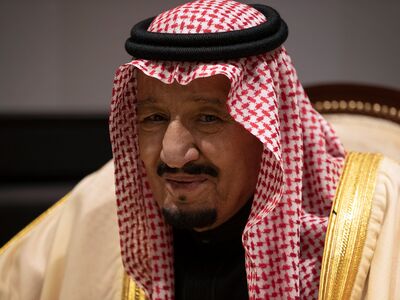
President Joe Biden intends to “recalibrate” the U.S. relationship with Saudi Arabia and will emphasize outreach to King Salman, in a move that signals a downgrade in ties with Crown Prince Mohammed Bin Salman, the country’s de facto ruler.

It is the latest sign Biden’s team is taking a different track from former President Donald Trump toward the world’s largest oil exporter. Trump established close ties with Prince Mohammed and made Saudi Arabia the centerpiece of his strategy toward the Middle East after taking his first trip abroad as president there.

That’s all being scaled back. In Biden’s first few days, the U.S. put a hold on some key weapons sales to the kingdom and announced new efforts to bring an end to the Saudi-led war in Yemen. Biden has also called on Saudi Arabia to improve its human rights record.

“We’re going to recalibrate our relationship with Saudi Arabia,” Press Secretary Jen Psaki told reporters on Tuesday. “Part of that is going back to engagement counterpart-to-counterpart. The president’s counterpart is King Salman.”
Theresa May Attends The First Arab-European Summit - Day One

King Salman

Photographer: Dan Kitwood/Getty Images


Biggest LNG Maker Aims For Another 20 Years On The Throne - Bloomberg video+

Biggest LNG Maker Aims For Another 20 Years On The Throne - Bloomberg


Qatar aims to be the world’s biggest producer of liquefied natural gas for at least the next two decades, capitalizing on rising demand as the world transitions from oil and coal to cleaner energy.

Qatar will spend billions of dollars expanding its LNG capacity more than 50% to 126 million tons a year. That’s a level other countries will struggle to match, Energy Minister Saad Al-Kaabi said in an interview with Bloomberg Television.

The country is already the world’s main supplier of the super-chilled fuel, but new projects elsewhere -- especially in Australia and the U.S. -- have eroded its dominance.

The Persian Gulf nation will be able to produce LNG from the first phase of the expansion so cheaply that it will be viable even if oil prices fall below $20 a barrel, said Al-Kaabi. “This is one of the most competitive, if not the most competitive, projects on the planet,” he said.


Oil extends rally on Texas supply disruptions | Reuters

Oil extends rally on Texas supply disruptions | Reuters

Oil prices advanced further on Wednesday, underpinned by major supply disruption in the south of the United States this week, caused by a historic winter storm in Texas.

U.S. West Texas Intermediate (WTI) crude futures rose 41 cents, or 0.68%, to $60.46 a barrel at 0752 GMT.

Brent crude futures gained 44 cents, or 0.69%, to $63.79 a barrel.

Oil prices have run up strongly in recent months and output disruptions caused by the storm in Texas, the country’s largest oil producing state, continued to keep prices supported, analysts said.

ANZ and Citigroup analysts estimated at least 2 million barrels per day (bpd) of U.S. shale oil production has been curtailed. Citi estimated a cumulative production loss of around 16 million barrels through early March.

MIDEAST STOCKS-Major Gulf markets mixed in early trade | Nasdaq

MIDEAST STOCKS-Major Gulf markets mixed in early trade | Nasdaq

Major Gulf stocks were mixed early on Wednesday in the absence of fresh factors to trade on, with Saudi index on track to extend gains for a ninth consecutive session.

Saudi Arabia's benchmark index .TASI rose 0.3%, with Al Rajhi Bank 1120.SE gaining 0.8%, while Saudi Arabian Mining Company 1211.SE was up 2.1%.

Meanwhile, the kingdom's sovereign wealth fund has increased its holding of U.S. stocks to nearly $12.8 billion in the fourth quarter from $7 billion in the third quarter, according to a U.S. regulatory filing on Tuesday.

Saudi Crown Prince Mohammed bin Salman has long pushed the Public Investment Fund as a central plank in his plan to find ways of driving growth while weaning the economy off its dependence on oil.

In Dubai, the index .DFMGI edged up 0.2%, helped by a 1.6% gain in blue-chip developer Emaar Properties EMAR.DU.

The Abu Dhabi index .ADI eased 0.2%, hit by a 0.5% fall in the country's largest lender First Abu Dhabi Bank FAB.AD.

In Qatar, the index .QSI lost 0.5%, as most of the stocks were in red including petrochemical maker Industries Qatar IQCD.QA, which retreated 1.2%.

Among others, Qatar National Bank QNBK.QA, the Gulf's largest lender, slipped 0.8%.

Tuesday, 16 February 2021

Oil settles near 13-month highs; Texas deep freeze supports | Reuters

Oil settles near 13-month highs; Texas deep freeze supports | Reuters

Oil prices settled near 13-month highs on Tuesday, supported by a deep freeze in the U.S. South that shut wells and oil refineries in Texas.

Prices have been buoyant for months, with major oil producing countries restricting supply and vaccines rolling out to combat the coronavirus pandemic.

U.S. West Texas Intermediate (WTI) crude futures settled up 1% to $60.05, after touching their highest since early January 2020. Brent settled up 5 cents, or 0.1%, to $63.35 a barrel, near the 13-month peak reached the previous session.

“Cold temperatures have added supply side support amidst numerous well freeze-offs and several refinery disruptions as some facilities have seen forced shutdowns due to power restriction,” said Jim Ritterbusch, president of Ritterbusch and Associates in Galena, Illinois.

Oil price rally points to more OPEC+ easing from April -sources | Reuters

Oil price rally points to more OPEC+ easing from April -sources | Reuters

OPEC+ oil producers are likely to ease curbs on supply after April given a recovery in prices, OPEC+ sources said, although any increase in output will be modest as producers are wary of fresh setbacks in the battle against the pandemic.

The Organization of the Petroleum Exporting Countries and allies, known as OPEC+, slowed the pace of a planned output increase in January to match weaker-than-expected fuel demand due to continued restrictions on population movement because of the pandemic. Saudi Arabia made additional voluntary cuts to supply for February and March.

An oil rally since then to a 13-month high to almost $64 per barrel has boosted confidence among producers that the market could absorb more supply.

Forecasters, including OPEC, are predicting a record rise in demand this year as vaccines are rolled out, despite current weakness. [OPEC/M]

“Yes, if demand recovers as we expect, OPEC+ will ease the production adjustments gradually, always thinking about reducing the inventory overhang,” said an OPEC delegate, asked if the oil rally would make easing more likely from April.

#Saudi sovereign wealth fund boosts U.S. equities exposure to nearly $12.8 billion | Reuters

Saudi sovereign wealth fund boosts U.S. equities exposure to nearly $12.8 billion | Reuters

Saudi Arabia’s sovereign wealth fund has increased its holding of U.S. stocks to nearly $12.8 billion in the fourth quarter from $7 billion in the third quarter, according to a U.S. regulatory filing on Tuesday.

The Public Investment Fund (PIF) took new bets in the last quarter, buying a $1.07 billion stake in Electronic Arts Inc and a $1.4 billion stake in Activision Blizzard, according to a Securities and Exchange Commission filing.

In the third quarter, the PIF had cut its exposure to North American equities by $3 billion, offloading some exchange traded funds (ETF) and stocks including Berkshire Hathaway.

At the start of 2020 the sovereign wealth fund bulked up minority stakes in companies worldwide, including oil companies, taking advantage of market weakness caused by the COVID-19 pandemic.

Factbox: #SaudiArabia's main economic and social reforms, investor concerns | Reuters

Factbox: Saudi Arabia's main economic and social reforms, investor concerns | Reuters

A requirement for foreign firms to have a regional HQ in Saudi Arabia to qualify for state contracts from 2024 is the latest in a series social and economic reforms intended to modernise the conservative kingdom and diversify its oil-dependent economy.

Here are some of the main reforms implemented by Crown Prince Mohammed bin Salman, as well as some leading investor concerns and reforms yet to be implemented.

SOCIAL REFORMS
*2016

Saudi Arabia curbs the powers of the religious police who once patrolled public spaces, neutering their ability to impose strict rules on women’s dress or enforce bans on alcohol, music, prayer-time closures and the mixing of men and women.

Warner Music Buys Stake in #Saudi Billionaire Alwaleed Bin Talal's Record Label - Bloomberg

Warner Music Buys Stake in Saudi Billionaire Alwaleed Bin Talal's Record Label - Bloomberg

Warner Music Group Corp. has acquired a stake in Saudi billionaire Prince Alwaleed Bin Talal’s Rotana Music, giving it rights to distribute releases by some of the Arab world’s biggest artists outside the Middle East.

The New York City-based entertainment publishing company, which owns hip-hop music labels Atlantic Records and Asylum Records, didn’t disclose details of the investment. The deal involved Warner acquiring a significant minority stake in Rotana Music that valued the Middle East record label at about $200 million, according to a person familiar with the transaction.

Cementing the deal gives Alwaleed’s Rotana an infusion of cash and international distribution network for its stars, while Warner Music gets access to a young, tech-savvy region.

Alwaleed invested about $270 million into Deezer in 2018, a deal that also made available Rotana’s audio and video content for the music streaming service. That investment was the first made by the prince after he was detained in 2017 in what the Saudi government described as a crackdown on corruption. He was released a few months later after signing a “confirmed understanding” with Saudi authorities.

#UAE's top Islamic banks saw impairment losses widening in 2020 | ZAWYA MENA Edition

UAE's top Islamic banks saw impairment losses widening in 2020 | ZAWYA MENA Edition

Leading Islamic banks in the UAE, Dubai Investment Bank (DIB) and Emirates Islamic Bank (EIB) posted increasing impairment losses in the financial year 2020.

Full year financial results showed DIB impairment losses reached AED 4.552 billion ($1.239 billion), up from AED 1.764 billion 2019.

EIB’s results, published at the end of January, showed impairment losses on financial assets reached AED 1.434 billion in 2020, up from AED 439 million in 2019, with impairment losses on non-financial assets of AED52 million in 2020, up from AED 43 million in 2019.

DIB’s chairman, Mohammed Ibrahim Al Shaibani, also the director general of the Ruler’s Court of Dubai, said the bank had provided AED 9 billion in relief to 54,000 customers in retail and corporate under the UAE’s Targeted Economic Support Scheme (TESS) programme. TESS was announced in March 2020 to provide support during COVID-19.

“The DIB franchise is capable of weathering challenging situations and possesses the ability to come out as a winner, as it has done in similar situations in the past,” he said.

Analysis: #SaudiArabia eyes #Dubai's crown with HQ ultimatum | Reuters

Analysis: Saudi Arabia eyes Dubai's crown with HQ ultimatum | Reuters

Saudi Arabia has ratcheted up the stakes in an intensifying competition with neighbouring Dubai for foreign talent and money.

From 2024, the Saudi government will stop giving state contracts to companies and commercial institutions that base their Middle East hubs in any other country in the region, the Saudi finance minister told Reuters.

The measure is the latest attempt by the kingdom, one of the world’s most conservative countries, to remould itself as a financial and tourism hub under the leadership of de facto ruler Crown Prince Mohammed bin Salman.

But challenging the dominance of Dubai, based in the United Arab Emirates (UAE), as the region’s commercial and financial capital will not be easy. With little of the oil wealth of its neighbours, it has built its economy on its open-for-business credentials and the promise of a glitzy lifestyle for well-heeled expatriates.

“It’s a further challenge to UAE business, especially Dubai, though the superior operating environment, legal environment and facilities (there) suggests that businesses may continue to have offices across the region,” said Rachel Ziemba, adjunct senior fellow at the Center for a New American Security, a Washington think tank.

#Dubai bucks Gulf trend with blue-chip sell-off | Reuters

Dubai bucks Gulf trend with blue-chip sell-off | Reuters

Most stock markets in the Middle East ended higher on Tuesday, though the Dubai index was dragged into negative territory by Dubai Islamic Bank (DIB).

DIB, the United Arab Emirates’ largest sharia-compliant lender, slid 2.6% after reporting a sharp decline in full-year profit while blue-chip developer Emaar Properties retreated 1.6%, weighing on a Dubai index down 1.2%.

Investor sentiment was also soured by Saudi Arabia’s plans to cease signing contracts with companies that do not have a regional base in the kingdom, looking to attract foreign investment and create local jobs.

Foreign firms have long used neighbouring United Arab Emirates as a springboard for regional operations, including for Saudi Arabia.

Saudi Arabia’s benchmark index edged up 0.2%, extending its rally for a ninth day, held back by a 4.9% slide for Jabal Omar Development.

Shares in oil behemoth Saudi Aramco finished 0.6% up after Credit Suisse raised its target price for the oil major’s shares to 30.5 riyals ($8.13), up from from 28 riyals.

In Abu Dhabi, the index added 0.3%, supported by a 1% gain for First Abu Dhabi Bank, the country’s largest lender.

Elsewhere, the Qatari index reversed early losses to close flat, helped by Commercial Bank’s 0.9% gain.

European, Middle Eastern & African Stocks - Bloomberg #UAE #Kuwait #Israel #SaudiArabia #Qatar close

European, Middle Eastern & African Stocks - Bloomberg #UAE #Kuwait #Israel #SaudiArabia #Qatar close


#AbuDhabi's ADQ lines up banks for $1 billion Louis Dreyfus acquisition loan - sources | Reuters

Abu Dhabi's ADQ lines up banks for $1 billion Louis Dreyfus acquisition loan - sources | Reuters

The Abu Dhabi Securities Exchange (ADX) has asked companies to produce their audited annual financial report on time.

ADX said in a circular on Tuesday that the report should be approved by the board of directors of the company and submitted within three months after the end of a financial year.

The exchange also reiterated that board members and insiders will be automatically prevented from trading until the relevant annual financial report is received.

“The listed companies should either disclose the financial report before or after the trading session according to the circulation of Securities and Commodities Authority,” ADX said.

The circular was issued to highlight the importance of disclosure and transparency for the benefit of all stakeholders.

ADX requires companies to produce annual financial report on time | ZAWYA MENA Edition

ADX requires companies to produce annual financial report on time | ZAWYA MENA Edition

The Abu Dhabi Securities Exchange (ADX) has asked companies to produce their audited annual financial report on time.

ADX said in a circular on Tuesday that the report should be approved by the board of directors of the company and submitted within three months after the end of a financial year.

The exchange also reiterated that board members and insiders will be automatically prevented from trading until the relevant annual financial report is received.

“The listed companies should either disclose the financial report before or after the trading session according to the circulation of Securities and Commodities Authority,” ADX said.

The circular was issued to highlight the importance of disclosure and transparency for the benefit of all stakeholders.

Oil prices near 13-month highs, supported by Texas cold snap | Reuters

Oil prices near 13-month highs, supported by Texas cold snap | Reuters

Oil prices hovered near 13-month highs on Tuesday, supported by a cold snap that shut wells in the biggest U.S. producing state Texas, although gains were capped by a wage deal in Norway that averted supply disruptions in Europe.

The global rollout of coronavirus vaccinations, fuelling expectations of a recovery in the global economy and oil demand, has also kept prices buoyant.

Keenly watched U.S. oil inventory data from the API industry association and Energy Information Administration (EIA) will be released this week on Wednesday and Thursday, respectively, each delayed by a day after U.S. markets were closed on Monday.

Benchmark Brent crude slipped 16 cents, or 0.2%, to $63.14 a barrel by 1056 GMT, but it remained to its highest since January 2020 that was reached the previous session.

U.S. West Texas Intermediate (WTI) crude futures gained 33 cents, or 0.6%, to $59.80 a barrel by 1056 GMT, after touching their highest since early January 2020.

#Dubai Islamic Bank’s full year profit drops on higher impairment charges | The National

Dubai Islamic Bank’s full year profit drops on higher impairment charges | The National

Dubai Islamic Bank (DIB), the largest Sharia-compliant lender in the UAE by assets, reported a 34 per cent drop in its full-year net profit as impairment charges and operating expenses rose amid the coronavirus pandemic.

Net profit attributable to owners of the bank for the period ending December 31, 2020 declined to Dh3.29 billion ($895 million). Impairment charges more than doubled to Dh4.5bn as the lender took a "prudent approach" to its loan book to protect against unforeseen scenarios, the lender said in a statement to the Dubai Financial Market, where its shares trade. Operating expenses climbed 16 per cent to Dh2.7bn.

“The DIB franchise is capable of weathering challenging situations and possesses the ability to come out as a winner, as it has done in similar situations in the past,” Mohammed Al Shaibani, director-general of the Ruler’s Court of Dubai and chairman of Dubai Islamic Bank, said.

“The confidence shown by investors, stakeholders and customers alike towards the DIB Group is testament to the trust and dependability that it owns.”

National Bank of #Kuwait hires banks for dollar AT1 bonds - document | Reuters

National Bank of Kuwait hires banks for dollar AT1 bonds - document | Reuters

The National Bank of Kuwait has hired a group of banks to arrange investor calls ahead of a planned issuance of U.S. dollar-denominated Additional Tier 1 bonds, a document showed on Tuesday.

NBK hired Citi, HSBC, JPMorgan, NBK Capital, Standard Chartered and UBS to arrange investor calls starting on Tuesday, which will be followed by the issuance - subject to market conditions - of the perpetual bonds that will be non-callable for six years, the document from one of the banks showed.

#Russia’s Pandemic Winners Drive $10 Billion Share Sale Pipeline - Bloomberg

Russia’s Pandemic Winners Drive $10 Billion Share Sale Pipeline - Bloomberg

Russia is on track for a blockbuster year of share sales, led by gold miners, e-commerce companies, and other firms emerging stronger from the pandemic.

Initial and secondary public offerings by Russian companies on domestic and foreign exchanges could exceed $10 billion this year, according to VTB Capital, the investment-banking arm of Russia’s second-biggest lender. That would be the strongest showing in at least eight years, Dealogic data show.


For now, markets are awash with stimulus, tempting local companies to join the global IPO rush after Russia’s benchmark MOEX stock index hit a record high last month. That could change if opposition leader Alexey Navalny’s arrest and imprisonment triggers tougher sanctions from the U.S. and Europe, but some investors are betting fresh penalties wouldn’t be severe enough to rattle markets.

“A lot of the companies planning equity offerings benefited from the pandemic, and their value increased,” said Fedor Tregubenko, UBS Group AG’s Russia chief. “Financial markets had a large liquidity boost last year, so there is demand for new investments.”

Gulf Fund Raises $75 Million for Mideast, North African Startups - Bloomberg

Gulf Fund Raises $75 Million for Mideast, North African Startups - Bloomberg

A Gulf venture capital firm created a year ago has raised $75 million to deploy in startups across the Middle East, as rich Saudi companies and families seek to monetize on the boom in technology firms.

Nuwa Capital, based both in Dubai and Riyadh, has finished the first round of investment in its Nuwa Ventures Fund I and targets reaching the $100 million mark this year, Khaled Talhouni, managing partner at Nuwa Capital, said in a phone interview.

The appetite for tech firms has been increasing among Gulf investors as governments in the region step up efforts to steer their economies away from oil. Saudi Arabia’s Public Investment Fund, which has bet on companies such as Uber Technologies Inc. and Jio Platforms Ltd., is expected to spend as much as $40 billion in the oil-rich kingdom throughout 2022.

Most of the proceeds raised in the Nuwa fund comes from Saudi family business and corporate groups, including the Al Faisaliah Group, Talhouni said.

Talhouni, Sarah Abu Risheh and Stephanie Nour Prince, founding partners at Nuwa Capital, previously worked at Wamda Capital, which first invested in Dubai-based ride-hailing app Careem in 2015. Careem was later sold to Uber for about $3 billion in 2019.

Nuwa Capital will target areas that include software as a service and providers of technologies for traditional industries like food and beverage and health care, Abu Risheh said.

“We like to see companies that go pan-regional, that’s where we see success,” Abu Risheh said by phone.

Watani Iron Steel to start trading on Tadawul from February 17 | ZAWYA MENA Edition

Watani Iron Steel to start trading on Tadawul from February 17 | ZAWYA MENA Edition

The Saudi Stock Exchange (Tadawul) has announced the listing of Watani Iron Steel Co on its parallel market NOMU from tomorrow (Wednesday).

The company will have a +/- 30 percent daily price fluctuation limit and a +/- 10 percent static price fluctuation limit.

The Capital Market Authority (CMA) approved the registration of Watani Iron Steel shares for the purpose of direct listing on NOMU in December 2020.

Outlook: Investors may find value in select equities despite higher valuations | ZAWYA MENA Edition

Outlook: Investors may find value in select equities despite higher valuations | ZAWYA MENA Edition

AD Investment Management (ADIM) said it sees opportunity for MENA investors to selectively find value in equities, despite the spike in valuations after the initial shock of COVID-19.

The Middle East-focused asset management boutique sponsored by Invest AD, said with fiscal stimulus and deficit spending to remain integral -- coupled with yield curve control and vaccine rollouts accelerating the evolution of a ‘new normal’-- the investment landscape in 2021 may reflect a continuation of the reflation/momentum trade, albeit at increased volatility.

There is also potential to position portfolios for recoveries in stocks depressed by years of unfortunate cycle timing, ADIM said in its Annual Outlook Letter for 2021.

Investors need to pick stocks with relatively attractive valuations that can help to normalize in returns within a period of time order to mitigate the risk of increasing interest rates disrupting the surge in equities, it said.

“Markets in aggregate seem to be currently priced to beyond perfection, where a lot needs to go right on the path to projected growth for them to justify their valuations,” said ADIM’s Annual Outlook Letter. “Even then, they are not offering the kind of returns one would hope for over the next decade from where we are today.”

Oil prices climb as deep freeze shuts U.S. oil wells, curbs refineries | Reuters

Oil prices climb as deep freeze shuts U.S. oil wells, curbs refineries | Reuters

Oil prices rose on Tuesday as a cold front shut wells and refineries in Texas, the biggest crude producing state in the United States, the world’s biggest oil producer.

Prices also gained as Yemen’s Iran-aligned Houthi group said it struck airports in Saudi Arabia with drones, raising supply concerns in the world’s biggest oil exporter, and on optimism for a global economic recovery amid accelerated COVID-19 vaccine rollouts.

Brent crude was up 14 cents, or 0.2%, at $63.44 a barrel at 0740 GMT, after rising to its highest since January 2020 in the previous session.

U.S. West Texas Intermediate (WTI) crude futures gained 61 cents, or 1%, to $60.08 a barrel. WTI did not settle on Monday because of a U.S. federal holiday. Prices will settle at the close of trading on Tuesday.

“The unexpected U.S. supply disruption provides another short term price recovery bridge that has likely taken oil prices to a level where markets were eventually heading but just a little bit quicker than expected,” Stephen Innes, chief global markets strategist at Axi said in a note on Tuesday.

MIDEAST STOCKS-Gulf markets mostly slip in early trade | Nasdaq

MIDEAST STOCKS-Gulf markets mostly slip in early trade | Nasdaq

Most stock markets in the Gulf were slightly lower early on Tuesday, with the Dubai index leading losses, weighed down by Dubai Islamic Bank (DIB) DISB.DU.

DIB, the United Arab Emirates' largest sharia-compliant lender, reported a net profit of 3.16 billion dirhams ($860.38 million) for 2020, down sharply from 5.10 billion dirhams a year earlier.

Dubai's main share index .DFMGI declined 0.9%, dragged down by a 2.8% fall in Dubai Islamic Bank and a 0.4% drop in Emirates NBD Bank ENBD.DU.

National Central Cooling Co (Tabreed) TABR.DU, however, added 0.4%.

On Monday, Tabreed Chief Executive Bader Al Lamki said the company is interested in acquiring the district cooling unit that serves Dubai International Airport.

District cooling firms deliver chilled water via insulated pipes to offices, as well as industrial and residential buildings.

Saudi Arabia's benchmark index .TASI eased 0.1%, on track to end eight sessions of gains, with Al Rajhi Bank 1120.SE losing 1.3%.

Among losers, Bank AlJazira 1020.SE slipped 2.4% after the lender reported a steep fall in 2020 profit.

Abu Dhabi's stock market outperformed the region, with its index .ADI edging up 0.2%, lifted by a 0.5% gain in the country's largest lender First Abu Dhabi Bank FAB.AD.

Elsewhere, the Qatari benchmark .QSI eased 0.2%, hit by a 1.7% fall in Qatar Navigation QNNC.QA.

Monday, 15 February 2021

Oil hits 13-month highs as market rebalances | Reuters

Oil hits 13-month highs as market rebalances | Reuters

Oil prices soared to their highest in about 13 months on Monday as vaccine rollouts promised to revive demand and producers kept supply reined in.

Brent crude was up 70 cents, or 1.1%, at $63.13 a barrel at 12:15 p.m. EST (1715 GMT) after hitting a session peak of $63.76, its highest since Jan. 22 last year.

U.S. West Texas Intermediate (WTI) crude futures gained 63 cents, or 1.1%, at $60.10 after touching $60.95, the highest since Jan. 8 last year.

Oil prices gained about 5% last week.

#SaudiArabia Aims to Sideline Firms Without Base in the Kingdom - Bloomberg

Saudi Arabia Aims to Sideline Firms Without Base in the Kingdom - Bloomberg

Saudi Arabia said it will stop working with foreign firms that don’t base their Middle East headquarters in the kingdom, in its latest effort to shift the Gulf region’s business hub away from Dubai.

From Jan. 1, 2024 the government as well as agencies, institutes and funds owned by the state will no longer contract any companies or commercial institutions unless they have a regional hub in Saudi Arabia, according to a statement on the Saudi Press Agency attributed to an official source. The move is intended to encourage foreign firms to hire more Saudi nationals and limit “economic leakage,” according to the SPA report.

Dubai in the the United Arab Emirates has firmly established itself as the regional business hub for everything from banking to transport and logistics. As part of attempts to open and diversify its economy Saudi Arabia has though offered firms a package of incentives including tax breaks under a plan dubbed “Project HQ.”

A group of 24 international firms including Deloitte, PwC, Bechtel and PepsiCo said they were moving their regional headquarters to the kingdom at an annual investment conference organized by Saudi Arabia’s sovereign wealth fund last month.

Mideast Stocks: #Saudi shares climb on higher crude while #Qatar falls | ZAWYA MENA Edition

Mideast Stocks: Saudi shares climb on higher crude while Qatar falls | ZAWYA MENA Edition

Saudi shares extended gains for an eighth consecutive session on Monday on rising crude oil prices while corporate results weighed on the Qatari index.

Oil prices soared to their highest in about 13 months as vaccine rollouts promised to revive demand and producers kept supply in check.

Saudi Arabia's benchmark index advanced 0.5%, with Al Rajhi Bank rising 1.8% and National Commercial Bank climbing 1.5%. 

The Qatari index lost 0.5%, dragged down by a 8.1% slide for telecoms giant Ooredoo after it reported a loss of 342 million riyals ($93.96 million) in the fourth-quarter, against a profit of 460 million riyals a year earlier.

Qatar Insurance fell 3.5% after a decline in 2020 profit.

Elsewhere, Dubai's main share index firmed 0.7%, led by a 1.9% rise for Emaar Properties despite the blue-chip developer's 58% drop in full-year profit.

Emaar founder Mohamed Alabbar was more optimistic about 2021, saying there were opportunities both traditional and technological that didn't exist five or 10 years ago.

In Abu Dhabi, the index slipped 0.3%, hit by a 1.6% decline for Aldar Properties and a 0.7% fall for the country's largest lender and index heavyweight First Abu Dhabi Bank.

#Sharjah's UAB blames NMC exposure, 'legacy issues' for $182mln loss | ZAWYA MENA Edition

Sharjah's UAB blames NMC exposure, 'legacy issues' for $182mln loss | ZAWYA MENA Edition

United Arab Bank (UAB) has blamed its exposure to NMC, as well as some legacy issues and the COVID-19 pandemic for its recent losses, which widened in 2020.

The bank reported a net loss of 667.3 million dirhams ($182 million) for 2020, after a loss of 470.7 million dirhams in 2019.

In a statement to the Abu Dhabi Securities Exchange (ADX), UAB said last year’s results were “predominantly driven by higher impairment charges due to the bank’s legacy issues”.

“[This was] further exacerbated by the challenging operating environment driven by COVID-19 and the low interest rate environment, as well as its exposure to NMC and its associated accounts,” UAB said.

UAB’s revenue dropped from 544.7 million dirhams in 2019 to 402.8 million dirhams in 2020.

European, Middle Eastern & African Stocks - Bloomberg #UAE #Kuwait #Israel #SaudiArabia #Qatar close

European, Middle Eastern & African Stocks - Bloomberg #UAE #Kuwait #Israel #SaudiArabia #Qatar close


Global Oil Markets Are Now Balanced, Russia’s Novak Says - Bloomberg

Global Oil Markets Are Now Balanced, Russia’s Novak Says - Bloomberg

Global oil markets have rebalanced following last year’s historic collapse in demand, according to Russia’s deputy prime minister.

“The last few months we have seen low volatility, which means the market is balanced, and the prices we see today certainly correspond to the situation in the market,” Alexander Novak said on state television channel Rossiya 1 on Sunday. Crude will probably average $45 to $60 a barrel this year, according to Novak, who was Russian energy minister before President Vladimir Putin promoted him in November.

Benchmark Brent crude has surged 22% this year to top $63 a barrel as energy use recovers in the U.S. and China and nations roll out coronavirus vaccines. Prices have also been buoyed by deep supply cuts from the Organization of Petroleum Exporting Countries and its partners, who are trying to clear surplus stockpiles built up during the pandemic.

The oil market “has partially recovered, but not completely yet,” Novak said, adding that global demand was about 8% to 9% below pre-pandemic levels by the end of last year, compared with a decline of 20% to 25% in April and May.

#Saudi and Qatari bonds fall as U.S. yields rise | ZAWYA MENA Edition

Saudi and Qatari bonds fall as U.S. yields rise | ZAWYA MENA Edition

Longer-term dollar-denominated bonds issued by investment-grade Gulf countries fell by more than a cent on Monday, Refinitiv's Tradeweb pricing showed, tracking a rise in U.S. Treasury yields.

Saudi government bonds due in 2060 shed 1.4 cents to trade at 118.25 cents on the dollar, while Qatari bonds due in 2050 fell 1.35 cents to 123.47 on the dollar.

Abu Dhabi bonds due in 2050 were down 1.55 cents to 114.8 on the dollar.

The Gulf countries' currencies are pegged to the dollar.

"Since most GCC (Gulf Cooperation Council) sovereigns (apart from high-yield countries Bahrain and Oman) are investment-grade rated (they) do react relatively strongly on underlying development in U.S. and EU rates," said Sergey Dergachev, a fund manager at Union Investment.

Oman and Bahrain's government bonds were little changed on Monday, Refinitiv's Tradeweb data showed.

#UAE NMC hospital founder B.R. Shetty, others under pressure as UK court orders total asset freeze | Banking – Gulf News

UAE NMC hospital founder B.R. Shetty, others under pressure as UK court orders total asset freeze | Banking – Gulf News


A court in London has put a freeze on any asset disposals by Dr. B.R. Shetty, founder of Abu Dhabi headquartered NMC Healthcare, as well as on other shareholders and former top executives, including Prasanth Manghat, who stepped down as CEO in late February last year.

The latest court order is sweeping in its impact – no assets held anywhere in the world by these individuals can now be sold. In recent months, court orders freezing Shetty’s assets had been issued in Dubai (by DIFC Courts) as well as in India after lenders – to NMC and Shetty individually – brought charges.

The verdict will “amplify the pressure” on Shetty and the others named, according to banking industry sources here. Manghat owns and operates hospitals and clinics in Kerala, including a specialty facility in Palghat.

He is believed to be in India, as are other former executives. They made their departures as soon as the NMC scandal came to light.

The UK court order stems from a request from Abu Dhabi Commercial Bank – the entity with the highest exposure to NMC, at an estimated Dh4 billion. Not just that, the ‘Financial Times’ reported that ADCB in its plaint specifically named Shetty – who founded NMC in the mid-1970s – as being the “chief protagonist” in the whole billion-dollar saga.

#Dubai Airports CEO Griffiths Says Dubai Made Good Progress on Traffic - Bloomberg video

Dubai Airports CEO Griffiths Says Dubai Made Good Progress on Traffic - Bloomberg

Aldar CEO: #UAE Stabilizing Economy Helped Business to Flourish - Bloomberg video

Aldar CEO: U.A.E. Stabilizing Economy Helped Business to Flourish - Bloomberg


Talal Al Dhiyebi, Aldar, CEO discusses the U.A.E. property market during pandemic. He speaks with Yousef Gamal El-Din and Manus Cranny on "Bloomberg Daybreak: Middle East." (Source: Bloomberg)

OPEC Cuts, Virus Has India Eying Prompt Imports of Light Oil - Bloomberg

OPEC Cuts, Virus Has India Eying Prompt Imports of Light Oil - Bloomberg

India’s refiners are turning to spot oil from Africa and North America as long-term suppliers in the Middle East cut output and as demand for gasoline jumps amid the Covid-19 pandemic.

Spot crude imports into the world’s third-largest oil market will rise by 10% to 15% this year from 2020, according to industry consultant FGE. The increased purchases are coming as India’s top suppliers, including Saudi Arabia and Iraq, curtail output as part of the OPEC+ pact.

The shift underscores how other producers are benefiting from the cuts as consumption returns in markets like India. It’s been especially good to exporters like the U.S. and Nigeria, whose crude produces more gasoline that’s in high demand as the pandemic pushes people to private cars instead of public transport.

“The pullback from traditional term suppliers came when refiners maximized throughput to align with the robust domestic demand recovery,” said Senthil Kumaran, FGE’s head of South Asia oil. “They were forced to scramble for spot supplies to bridge the shortfall.”


Oil hits 13-month highs as market re-balances | Reuters

Oil hits 13-month highs as market re-balances | Reuters

Oil prices soared on Monday to their highest in about 13 months as vaccine rollouts promised to revive demand and producers kept supply reined in.

Brent crude was up 77 cents, or 1.2%, at $63.20 a barrel at 0955 GMT, after climbing to a session high of $63.76, the highest since Jan. 22, 2020.

U.S. West Texas Intermediate (WTI) crude futures gained $1.04, or 1.8 %, to $60.51 a barrel. It touched $60.95 - its highest since Jan. 8 last year, earlier in the session.

Oil prices gained around 5% last week.

#UAE's Tabreed is interested in #Dubai airport district cooling deal - CEO | Reuters

UAE's Tabreed is interested in Dubai airport district cooling deal - CEO | Reuters

Dubai-listed National Central Cooling Co (Tabreed) is interested in acquiring the district cooling unit that serves Dubai International Airport, Tabreed Chief Executive Bader Al Lamki said on Monday.

Tabreed has been on a shopping spree during the COVID-19 pandemic, snapping up assets in locations such as Abu Dhabi’s Saadiyat Island, home to a Louvre museum. It also acquired an 80% stake in Dubai developer Emaar’s downtown district cooling business for 2.48 billion dirhams ($675 million).

“Dubai (international) airport has been in the market. We are looking at it. We will see how it goes,” Al Lamki told Reuters in an interview.

District cooling firms deliver chilled water via insulated pipes to offices, as well as industrial and residential buildings. With 86 district cooling plants, Tabreed services developments such as the Burj Khalifa, the world’s tallest skyscraper, the Dubai Opera and the Dubai Mall.

Adnoc Distribution profits increase 8.2% to $653.5m in 2020 - Arabianbusiness

Adnoc Distribution profits increase 8.2% to $653.5m in 2020 - Arabianbusiness

UAE fuel and convenience retailer Adnoc Distribution’s net profits totalled $653.5m in 2020, an 8.2 percent increase compared to 2018, despite the continued economic uncertainty caused by the coronavirus crisis.

The increase was achieved despite revenues dropping by 24.4 percent over the last year, from $5.8 billion to $4.4bn.

In a statement on Monday, the firm reported that EBIDTA (earnings before interest, tax, depreciation and amortisation) rose 12.3 percent to $868m.

Ahmed Al Shamsi, acting chief executive officer of ADNOC Distribution, said: “We set ambitious growth targets for 2020 and it is testament to our resilient business model that we not only met, but exceeded guidance in terms of both new station openings and convenience store refurbishments.”

#Dubai Airports Traffic Slumps 70% in 2020 on Covid-19 Lockdowns - Bloomberg

Dubai Airports Traffic Slumps 70% in 2020 on Covid-19 Lockdowns - Bloomberg

Dubai International Airport reported a 70% slump in traffic last year as restrictions in place to stem the spread of the coronavirus pandemic put the air travel industry into a tailspin.

The number of travelers through the Middle East’s tourism hub fell to 25.9 million in 2020, according to a statement. That included 17.8 million passengers during the first quarter of the year, before the pandemic started to impact travel.

Since then, restrictions on air travel have battered airlines and airports around the world. “For the first time in the 60-year history of the world’s busiest international airport, the month of April saw commercial flights come to almost an entire halt,” the airport said.

Despite the drop in traffic, Dubai International Airport is the largest intercontinental hub in the world, Chief Executive Paul Griffiths said in an interview with Bloomberg TV on Monday. “There’s no reason to suggest why we won’t continue to be able to hold that crown going forward.”

Gulf expat exodus could continue until 2023, S&P says | Reuters

Gulf expat exodus could continue until 2023, S&P says | Reuters

The population in the Gulf Cooperation Council (GCC) states declined by about 4% last year due to an exodus of expatriates after the coronavirus crisis and lower oil prices, S&P Global Ratings said in a report on Monday.

The oil producing region was hit hard last year as COVID-19 restrictions impacted non-oil economic sectors, and lower oil prices and crude output cuts weighed on its main income source.

“We expect the proportion of foreigners in the region will continue to decline through 2023 relative to the national population, because of subdued non-oil sector growth and workforce nationalization policies,” S&P said.

Gulf states rely heavily on foreign workers in sectors ranging from financial services to healthcare and construction, but efforts to nationalise the workforce to fight rising unemployment among nationals have accelerated in recent years.

Oil hits 13-month highs on concerns of Middle East tensions | Reuters

Oil hits 13-month highs on concerns of Middle East tensions | Reuters

Oil prices soared on Monday to their highest in about 13 months as fears of heightened tensions in the Middle East prompted fresh buying, while hopes that a U.S. stimulus and an easing of lockdowns will buoy fuel demand provided support.

Brent crude was up $1.02, or 1.6%, at $63.45 a barrel at 0806 GMT, after climbing to a session high of $63.76, the highest since Jan. 22, 2020.

U.S. West Texas Intermediate (WTI) crude futures gained $1.28, or 2.2%, to $60.75 a barrel. It touched $60.95 - its highest since Jan. 8 last year, earlier in the session.

Oil prices gained around 5% last week.

The Saudi-led coalition fighting in Yemen said late on Sunday it intercepted and destroyed an explosive-laden drone fired by the Iran-aligned Houthi group toward the kingdom, state TV reported, raising fears of fresh Middle East tensions.

MIDEAST STOCKS- #Saudi stocks gain as oil soars; #Qatar dips on weak earnings | Nasdaq

MIDEAST STOCKS-Saudi stocks gain as oil soars; Qatar dips on weak earnings | Nasdaq

Saudi shares rose on Monday, on course to extend gains for an eighth consecutive session amid rising crude prices, while a string of disappointing corporate earnings weighed on Qatar.

Brent crude LCOc1 was up $1.02, or 1.6%, at $63.45 a barrel at 0806 GMT, as fears of heightened tensions in the Middle East prompted fresh buying, while hopes that U.S. stimulus and an easing of lockdowns will buoy fuel demand provided support. O/R

Saudi Arabia's benchmark index .TASI advanced 0.9%, with Al Rajhi Bank 1120.SE rising 3.6% and National commercial Bank 1180.SE climbing 2%.

The kingdom has extended by 20 days restrictions on entertainment activities, gatherings, and dine-in restaurant services to curb the spread of coronavirus, state news agency SPA said on Sunday, citing an interior ministry statement.

Two weeks ago Saudi Arabia suspended entry to the kingdom from 20 countries, with the exception of Saudi citizens, diplomats and medical practitioners and their families.

Dubai's main share index .TASI gained 0.6%, led by a 1.9% rise in Emaar Properties EMAR.DU, despite the blue-chip developer's 2020 profit plunging.

Emaar posted a net profit of 2.62 billion dirhams ($713.35 million) in 2020, down from 6.2 billion a year earlier.

However, Emaar's founder Mohamed Alabbar was more optimistic about 2021, saying there were opportunities both traditional and technological that didn't exist five or 10 years ago.

In Abu Dhabi, the index .ADI eased 0.1%, hit by a 1.1% fall in Aldar Properties ALDAR.AD and a 0.1% dip in the country's largest lender First Abu Dhabi Bank FAB.AD.

The Qatari index .QSI lost 0.3%, dragged down by a 5.8% slide in telecom giant Ooredoo ORDS.QA after it reported a loss of 342 million riyals ($93.96 million) in the fourth-quarter, compared to a profit of 460 million riyals a year earlier. []

Elsewhere, Qatar Insurance QINS.QA fell 3% following a decline in 2020 profit.

Sunday, 14 February 2021

Bank wins freezing order against NMC Health owners and executives | Financial Times

Bank wins freezing order against NMC Health owners and executives | Financial Times

A leading Abu Dhabi bank has won a worldwide freezing order against the principal owners and executives of NMC Health, the UK-listed healthcare group that collapsed into administration last year amid fraud claims. 

Abu Dhabi Commercial Bank, a major creditor with exposure of more than $1bn to the group, has secured the order from a court in London against six defendants: former owners BR Shetty, NMC’s founder; Emirati investors Khalifa al-Muhairi and Saeed al-Qebaisi; as well as the former chief executive, Prasanth Manghat; and two senior financial officers. 

At a high court hearing in December held in private, the judge granted the order against the six former owners and senior executives to prevent the risk of dissipation of assets, in light of the bank’s compensation claim for losses caused by “fraudulent misrepresentations and conspiracy”. 

The court’s judgment cited a witness statement from NMC’s chief executive, Michael Davis, who was appointed following Manghat’s departure about a year ago, which said a forensic team had found documentary evidence that the alleged fraud was carried out by the defendants. 

Abu Dhabi-based NMC, which has disclosed more than $4bn in unreported debt, was placed into administration in the UK in April last year, with the administrators also pursuing a process in Abu Dhabi.  

ADIB reports 'strong recovery' in second-half profits in 2020 | The National

ADIB reports 'strong recovery' in second-half profits in 2020 | The National

Abu Dhabi Islamic Bank reported a "strong recovery" in net profit during the second half of the year as revenue grew 10 per cent on higher levels of economic activity, but overall profit for the full-year remained 38 per cent lower after a first half disrupted by the Covid-19 pandemic.

Group net profit for the year stood at Dh1.6 billion, down from Dh2.6bn in the prior year. Full-year revenue was 9.4 per cent lower at Dh5.35bn.

“In an incredibly challenging year brought upon by the global Covid-19 pandemic, ADIB demonstrated strength, resilience and adaptability," the lender's chairman Jawaan Al Khaili said in a statement to the Abu Dhabi Securities Exchange, where its shares trade.

"I am particularly pleased with the significant recovery in our second half performance, which saw the bank’s net profit grow by 73 per cent compared to H1 2020. This was made possible due to a robust, diversified business model, and the outcome of a rigorous cost discipline programme that offset the impact of net profit margin compression."

ADIB's net margin fell 74 basis points to 3.51 per cent, despite the lender managing to cut operating expenses by 7.7 per cent year-on-year as it implemented a range of cost-saving measures.

Mideast Stocks: Oil bolsters #Saudi index as other Gulf markets slip | ZAWYA MENA Edition

Mideast Stocks: Oil bolsters Saudi index as other Gulf markets slip | ZAWYA MENA Edition

Most Middle East stock markets ended lower on Sunday, with financials weighing on the Dubai index, while Saudi extended gains for a seventh consecutive session on rising oil prices.

Oil, a key catalyst for the Gulf's financial markets, hit its highest levels in more than a year on Friday on hopes a U.S. stimulus will boost the economy and fuel demand.

Brent crude settled up $1.29, or 2.1%, at $62.43 a barrel by 1832 GMT after rising to a session high of $62.83, the highest since Jan. 22, 2020.

Saudi Arabia's benchmark index advanced 1%, boosted by a 4.4% surge in Al Rajhi Bank and a 4.2% rise in Saudi Arabian Mining Company.

Dubai's main share index dropped 0.4%, weighed down by a 5% fall in Mashreq Bank and a 0.4% decrease in Emirates NBD Bank.

Elsewhere, Dubai developer DAMAC Properties closed 1.6% lower after it reported a steep loss for 2020 as sales shrank during the coronavirus pandemic.

In Abu Dhabi, the index closed flat, as losses in financial shares were offset by gains in property stocks including Aldar Properties, which climbed 1.6%.

After trading hours, Abu Dhabi's largest property developer Aldar reported fourth-quarter net profit of 729 million dirhams ($198 million), a 28% rise on the same quarter a year earlier.

The Qatari index was down 0.1%, after a 0.7% fall in Qatar Islamic Bank.

Emaar founder sees 'world of opportunities' despite $1bn drop in profits - Arabianbusiness

Emaar founder sees 'world of opportunities' despite $1bn drop in profits - Arabianbusiness

The founder of Dubai-based giant Emaar Properties, Mohamed Alabbar, has said there are a “world of opportunities” in 2021, despite seeing year-on-year profits drop by almost $1 billion.

The master developer behind the Burj Khalifa reported a net profit of $712m for 2020, down 58 percent from the $1.7bn announced 12 months previously; while revenues dropped almost 20 percent, from $6.7bn in 2019 to $5.366bn.

Emaar’s financial results were revealed on the same day that fellow Dubai-based developer Damac announced losses of over $272m for 2020, blamed largely on the impact of the global coronavirus pandemic.

Alabbar said: “Our performance in 2020 is a direct result of our ability to move quickly, adapt to new business conditions and utilise our existing resources to access new opportunities. We continue to embrace technology to help grow our business, while at the same time closely adhere to the cost discipline that helps us achieve better results in each quarter.”

#Dubai Developers Suffer as Aldar Holds Steady in #AbuDhabi - Bloomberg

Dubai Developers Suffer as Aldar Holds Steady in Abu Dhabi - Bloomberg

The fortunes of property developers in Dubai and Abu Dhabi diverged last year.

Dubai’s Emaar Properties PJSC reported a 58% slump in profit, while Damac Properties PJSC posted its second consecutive full-year loss -- underscoring the impact of an oversupply aggravated by the coronavirus pandemic.

Aldar Properties PJSC in neighboring Abu Dhabi, however, performed better than Emaar and Damac. It posted a profit that was almost unchanged from a year ago as it benefits from government contracts.

A property glut and faltering demand have driven Dubai home prices down by more than 30% since the market peaked seven years ago, a decline made worse by the pandemic. The government last year set up a committee to manage supply and demand, while property developers temporarily halted new projects.


European, Middle Eastern & African Stocks - Bloomberg #UAE #Kuwait #Israel #SaudiArabia #Qatar close

European, Middle Eastern & African Stocks - Bloomberg #UAE #Kuwait #Israel #SaudiArabia #Qatar close


#Saudi index hits more than 9,000 points for first time since 2019 | ZAWYA MENA Edition

Saudi index hits more than 9,000 points for first time since 2019 | ZAWYA MENA Edition

Saudi Arabia’s stock market on Sunday crossed the 9,000 mark for the first time since July 2019.

The benchmark Tadawul index was trading one percent higher at 9,033.09 around 12 noon, with volumes traded hitting 157.99 million transactions. The value of shares traded stood at 5.77 billion riyals.

"The TASI rally was led by the nearly 4 percent rise in the shares of Al Rajhi Bank. The bank's earnings for [the full year 2020] were better than expected with its earnings per share better than six-year average and annual growth of 4.3 percent despite the pandemic," said Mohammed Alsuwayed, financial analyst at Razeen Capital.

Most sectors were also trading in the positive territory.

Etihad Atheeb Telecommunication Co. emerged as the top gainer, trading at 12.16 Saudi riyals ($3.24), while Al Rajhi Bank jumped nearly 4 percent to 83 riyals.

Shares of the company resumed trading on the exchange after it published its financial statement for nine months ending December 31, 2020.

Etisalat’s 2020 net profit rises 3.8% to Dh9bn | The National

Etisalat’s 2020 net profit rises 3.8% to Dh9bn | The National

Etisalat, the UAE's biggest telecom operator, reported a 3.8 per cent annual increase in net profit in 2020 despite a marginal decline in revenue.

Net profit attributable to equity holders in the 12 months ended December 31 rose to Dh9.03 billion, compared to Dh8.69bn a year earlier, the company said in a statement on Sunday to the Abu Dhabi Securities Exchange, where its shares trade.

Revenue during the period decreased 0.9 per cent to Dh51.7bn.

“This is mainly attributable to Covid-19 pandemic that resulted in temporary lockdown, restricted mobility and travel ban resulting in reduced activities in most of our markets that negatively impacted revenue,” Etisalat said.

These are the preliminary results and the audited financials for the 2020 and the fourth quarter will be disclosed on February 22.

Etisalat, which had a monopoly in the UAE until the country's second telecoms operator du entered the market in 2007, said its operating profit increased 10.3 per cent annually to more than Dh13bn last year.

Daman Investments' Ali El Adou on Cyclical Sectors, #Dubai Real Estate, #Saudi Market Outlook - Bloomberg video

Daman Investments' Ali El Adou on Cyclical Sectors, Dubai Real Estate, Saudi Market Outlook - Bloomberg


Ali El Adou, Daman Investments Head of Asset Management, discusses his company's rating of overweight in the UAE vs. other countries in the MENA region in the reopening trade in Dubai, how he favors exposure to cyclicals (including banks, metals, petrochemicals, and real estate), the Dubai real estate market, and the Saudi market outlook. He speaks with Manus Cranny and Yousef Gamal El-Din on "Bloomberg Daybreak: Middle East." (Source: Bloomberg)

Rasmala Investment Bank's Doug Bitcon on #Kuwait's Currency Peg, the #UAE Real Estate Market - Bloomberg video

Rasmala Investment Bank's Doug Bitcon on Kuwait's Currency Peg, the UAE Real Estate Market - Bloomberg


Doug Bitcon, Rasmala Investment Bank Head of Credit Strategies, discusses Kuwait's currency peg with the state unable to borrow, the Kuwaiti dinar 12-month forwards, and the UAE's real estate market. He speaks with Manus Cranny and Yousef Gamal El-Din on "Bloomberg Daybreak: Middle East." (Source: Bloomberg)

Mideast Stocks Trade Mixed With Earnings in Spotlight: Inside EM - Bloomberg

Mideast Stocks Trade Mixed With Earnings in Spotlight: Inside EM - Bloomberg

Middle Eastern equity markets were mixed on Sunday as investors weighed earnings and after shares in developing economies rose to a record high last week.

Saudi Arabia’s Tadawul All Share Index gained as much as 0.8%, with Al Rajhi Bank and Saudi Basic Industries contributing the most to the increase. Benchmarks in the United Arab Emirates, Oman and Qatar fell as much as 0.4%, while those in Bahrain and Kuwait were little changed.

Saudi shares rose in the wake of the MSCI Emerging Markets Index touching its highest level yet late last week, gaining on optimism over fiscal stimulus in the U.S. and coronavirus vaccine rollouts. Oil in London also climbed for a fourth straight week amid supply cuts by major producers and a recovery in U.S. demand.

In Dubai, Damac Properties PJSC fell close to 5% and dragged down the main index after posting a loss in 2020. The company’s chairman said it’ll take at least one to two years for the United Arab Emirates’ real estate market to get out of its downturn.

FINANCIAL RESULTS:
  • Damac FY Loss 1.04b Dirhams vs Loss of 37m Y/y; Est. Loss of 904m
  • Yanbu Cement FY Profit Misses Estimates
  • Leejam Sports FY Loss Misses Estimates
  • Mabanee FY Net Income 21.6M Dinars Vs. 56.4M Dinars Y/y
  • Burgan Bank FY Net Income Beats Estimates
  • Al Ahli Bank Of Kuwait FY Net Loss 69.7M Dinars
  • Waha Capital FY Profit 231m Dirhams Vs. Loss 616.3m Y/y
    • Div.: 0.06 Fils/Share for 2020
  • Alinma Bank FY Profit 1.97b Riyals, -30% Y/y; Est. 2.07b
  • Amlak Finance FY Loss 438m Dirhams, +37% Y/y

Oil Price Targets Would Make a Far Better Goal - Bloomberg

Oil Price Targets Would Make a Far Better Goal - Bloomberg

If you can’t hit the target, bring it closer. That seems to be the policy adopted by the OPEC+ alliance of oil producers as they make the world’s biggest-ever output cuts in an attempt to shore up oil prices.

After a meeting in January, the group’s co-leader, Saudi Arabia’s oil minister, Prince Abdulaziz Bin Salman, announced that the producers were setting themselves a new target for their output cuts — restoring oil stockpiles in the developed countries of the Organisation for Economic Cooperation and Development to a new five-year average level.

They’re focusing on the OECD because its members report oil stockpiles in a (relatively) timely fashion — preliminary levels for the end of December were published by the International Energy Agency last week, although they will be revised for many months to come. Whereas other countries, like China, don’t publish oil stockpile levels at all.

OPEC+ was formed in 2016 to combat the soaring global oil stockpile that resulted from the second U.S. shale boom and the collapse in oil prices. Its members sought to bring the volume of oil stored in tanks, salt caverns, ships and pipelines down to its five-year average level, although they were never quite specific about which five-year measure they had in mind. It was meant to be a quick, six-month process starting in January 2017. More than four years on, their efforts are continuing, given new urgency by the Covid-19 pandemic.

Damac Drops After Loss and Forecast for Slow #Dubai Recovery - Bloomberg

Damac Drops After Loss and Forecast for Slow Dubai Recovery - Bloomberg

Damac Properties PJSC plunged on Sunday after posting a loss and its chairman saying it’ll take at least one to two years for the United Arab Emirates’ real estate market to get out of its downturn.

“I anticipate it will take at least 12 to 24 months to see a substantial recovery,” Chairman Hussain Sajwani said in a statement after Damac posted its second consecutive full-year loss.

“2020 was a very tough year for all property developers in the United Arab Emirates and Damac felt the negative impact just the same,” he said.

The coronavirus pandemic has aggravated a property slump in Dubai, where oversupply and economic uncertainty has pushed down prices for years. The government last year set up a committee to manage supply and demand, while property developers temporarily halted new projects.

Damac shares slumped as much as 4.8%, the most in about two months, to trade at 1.20 dirhams. It was the biggest drag to Dubai’s DFM General Index, down 0.1%.


#Qatar Islamic Bank, HSBC sign $100mln deal | ZAWYA MENA Edition

Qatar Islamic Bank, HSBC sign $100mln deal | ZAWYA MENA Edition

Qatar Islamic Bank (QIB), the country’s largest sharia-compliant lender by assets, has signed an Islamic trade facility worth $100 million with HSBC Bank Middle East.

“This is a first-of-its-kind transaction for HSBC Bank Middle East within the MENAT [Middle East, North Africa and Turkey] region and we are very proud that Qatar was the first country where it was executed,” said Abdul Hakeem Mostafawi, CEO of HSBC Qatar, in a statement to the Qatar Stock Exchange on Sunday.

“We are very optimistic about the different growth opportunities in Qatar that is driven by the expansion in gas production, final preparations for the FIFA 2022 World Cup and ongoing investment in infrastructure development. This transaction signals a strong start to the year.”

Bassel Gamal group CEO of QIB also welcome the transaction.

“We are very proud that QIB is the first Bank in the region to complete an Islamic trade facility with HSBC. The transaction has been executed efficiently, with the highest professional standards. We look forward to further cooperation in the future,” he said.

Most major Gulf markets ease in early trade; #Saudi gains | Reuters

Most major Gulf markets ease in early trade; Saudi gains | Reuters

Most major stock markets in the Gulf fell in early trade on Sunday, with the Dubai index pressured by a string of disappointing earnings, although Saudi Arabia bucked the trend.

Saudi Arabia’s benchmark index, the regional outlier, advanced 1.1%, buoyed by a 4% jump in Al Rajhi Bank.

The lender is on track to extend gains for a eighth consecutive session after it reported annual net profit of 10.60 billion riyals ($2.83 billion), up from 10.16 billion a year earlier.

Dubai’s main share index fell 0.4%, hit by a 3.2% drop in DAMAC Properties after it reported a steep loss for 2020 as sales shrank during the coronavirus pandemic.

The Dubai developer had rallied in January amid the United Arab Emirates’ immunisation campaign, but a subsequent rise in coronavirus cases in the country dented sentiment.

Among others, Mashreq Bank retreated 5%. Last week, the lender posted a full-year loss.

In Abu Dhabi, the index eased 0.2%, with the country’s largest lender First Abu Dhabi Bank falling 0.5%.

The Qatari index lost 0.3%, pulled down by a 0.9% drop in Qatar Islamic Bank and a 0.4% decrease in petrochemical firm Industries Qatar.